

Trekking boots in Nepal can make or break your Himalayan adventure. When you’re spending 12 to 14 days hiking for at least 5 hours daily in unpredictable weather conditions, your footwear becomes your most crucial piece of equipment.
We’ve learned firsthand that choosing the right hiking boots is not only a matter of comfort but also of safety. Nepal’s rugged terrain demands footwear that can withstand rocks, mud, and steep slopes, while providing the traction necessary for stability on slippery trails. Fortunately, a good pair of trekking shoes can last years, sometimes even decades, making them a worthwhile investment for your journey.
After testing numerous options on the challenging but rewarding trail, We’ve compiled this list of the 7 best boots for trekking in Nepal. Whether you prefer sturdy traditional hiking boots or something lighter for those relatively level paths, this guide will help you find the perfect match for your Himalayan adventure.
1. La Sportiva Trango TRK GTX
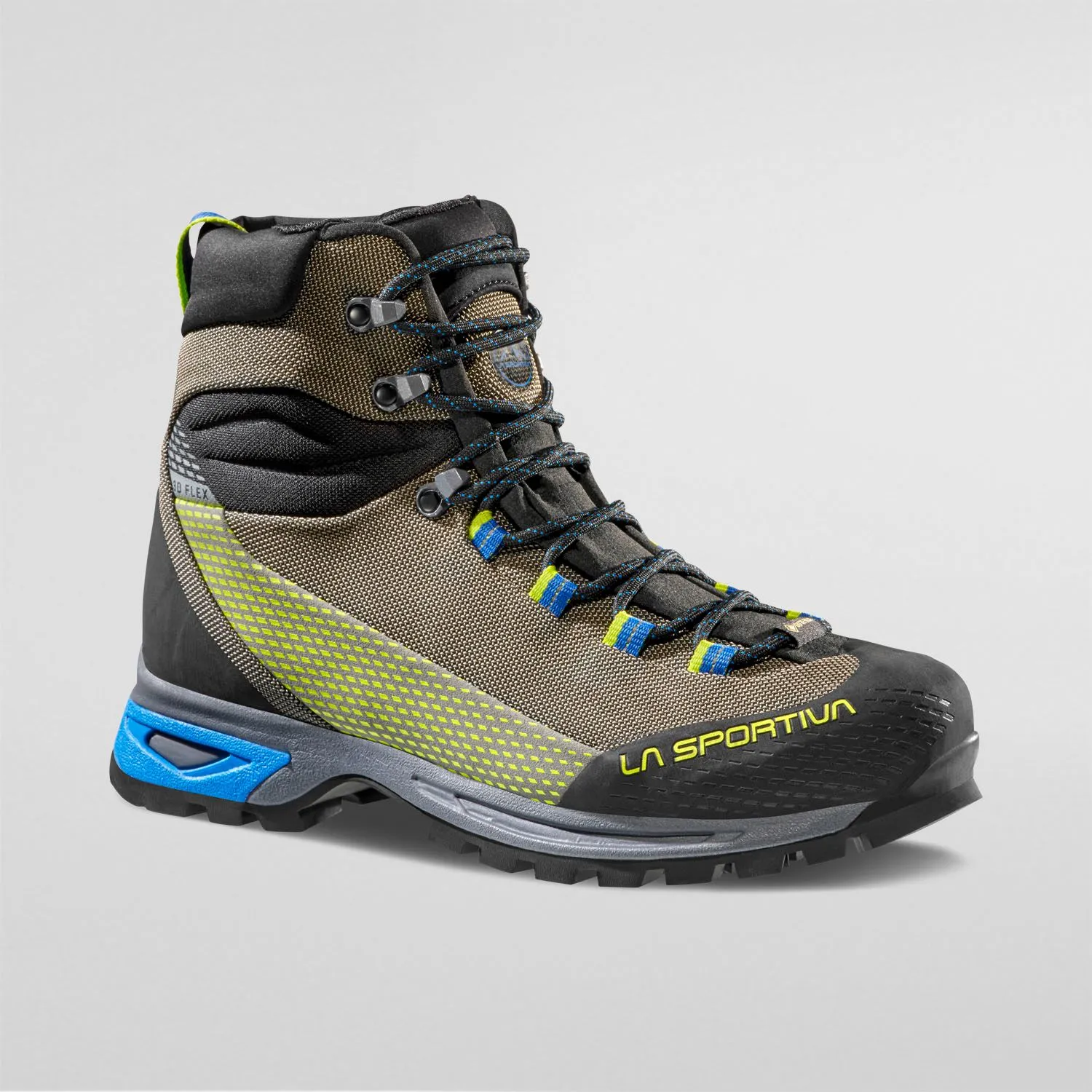
From La Sportiva’s iconic Trango family comes a high-performance trekking boot that has proven its worth on some of Nepal’s most demanding trails. With a heritage deeply rooted in alpine climbing, the Trango TRK GTX combines lightweight design with technical features typically reserved for serious mountaineering footwear.
La Sportiva Trango TRK GTX key features
The Trango TRK GTX stands out as a technical trekking boot designed for challenging terrain. Crafted with water-repellent and abrasion-resistant uppers, these boots withstand the punishment of rocky paths and muddy trails. A signature feature is the innovative 3D Flex System – a multi-directional ankle hinge that allows forward flexion while maintaining lateral stability to prevent ankle rolls.
The GORE-TEX Performance Comfort membrane ensures these boots remain waterproof throughout extended treks. During our testing in Nepal’s varying conditions, from dry rocky paths to monsoon-soaked trails, this waterproofing proved reliable even during river crossings that didn’t breach the ankle height.
Additionally, the Vibram Mulaz outsole delivers exceptional traction across diverse terrain. The technical edging platform and aggressive lugs performed admirably on everything from loose scree to slick boulders. For scrambling sections, the climbing zone at the toe provides precision grip that many competing boots lack.
Furthermore, protective rubber rands wrap around both toe and heel areas, defending against jagged rocks and roots that would quickly damage lesser boots. Despite this robust protection, the pair weighs just 1,440g (or about 2 lbs. 10.8 oz), making them remarkably lightweight for their capability.
La Sportiva Trango TRK GTX pros and cons
Pros:
- Exceptional ankle support with natural movement thanks to the 3D Flex system
- Superior waterproofing with GORE-TEX membrane
- Excellent breathability even in warm conditions (tested in temperatures reaching 80°F/25°C)
- Lightweight construction without sacrificing protection
- Vibram sole provides outstanding grip on varied terrain
- Durable construction with minimal seams to prevent hotspots
- Made with some recycled components (laces and Ortholite Hybrid footbed)
- Vegan-friendly (no animal-derived materials)
Cons:
- Narrower fit may not suit wider feet
- Synthetic materials give a somewhat “plasticky” appearance
- Relatively high price point compared to entry-level options
- Runs approximately half-size small (sizing up recommended)
La Sportiva Trango TRK GTX best for
In our experience, the Trango TRK GTX excels for serious trekkers tackling Nepal’s most challenging routes. We’ve personally tested these boots throughout the Everest, Manaslu, and Annapurna regions with consistently reliable performance.
They’re particularly suitable for:
- Multi-day treks with heavy backpacks
- Technical terrain requiring precise footing
- Varied conditions from dry rocky paths to muddy trails
- Hikers with narrower feet seeking maximum support
- Trekkers looking for a single versatile boot for multiple Himalayan adventures
Beyond Nepal, these boots perform admirably on other classic mountain routes worldwide, including Kilimanjaro. The combination of technical features, comfort, and waterproofing makes them ideal for trekkers who demand high performance in challenging conditions without the weight penalty of traditional mountaineering boots.
For those specifically planning a trek, the Trango TRK GTX provides the perfect balance of support, protection, and comfort needed for those long days on the trail.
2. Meindl Vakuum

Handcrafted in Germany’s Bavarian Alps, the Meindl Vakuum boots represent three centuries of bootmaking expertise. On the rugged trails of Nepal, these hiking boots have earned a loyal following among trekkers tackling demanding routes.
Meindl Vakuum key features
At the heart of these boots lies Meindl’s innovative Memory Foam System (MFS-Vakuum®) technology, which uses body heat to mold to your foot’s unique contours, creating a customized fit that eliminates pressure points. This adaptive fit extends throughout both the boot’s lining and footbed, forming a precise imprint of your foot over time.
The upper construction features premium Nubuck leather, offering exceptional durability while maintaining suppleness. A protective rubber rand encircles the boot, safeguarding against abrasion on rocky Himalayan trails. For waterproofing, Meindl employs GORE-TEX® membranes that keep feet dry through river crossings and monsoon conditions while allowing perspiration to escape.
The lacing system incorporates Meindl’s DiGAfix® technology, which locks your heel firmly in place, reducing blister risk on steep descents. This attention to fit extends to the padded ankle cuff, providing crucial support on uneven terrain.
Underfoot, the Meindl Multigrip Vibram® sole delivers outstanding traction across varied surfaces. The square-edged heel design offers excellent grip during descents, though some users note the lugs could be larger for winter conditions. Impressively, despite their robust construction, each boot weighs approximately 600-620g (size UK 8), striking a balance between protection and mobility.
Meindl Vakuum pros and cons
Pros:
- Exceptional comfort with minimal break-in period
- Superior customized fit thanks to memory foam technology
- Excellent ankle support and heel stability
- Durable construction that withstands hundreds of kilometers
- Reliable waterproofing in diverse conditions
- High-quality Vibram soles with excellent grip
- Resolable design extends boot lifespan
Cons:
- Heavier than some lightweight alternatives
- Higher price point than entry-level options
- Limited breathability in hot weather conditions
- Lacing system can be time-consuming
- Lace hooks susceptible to bending over time
Meindl Vakuum best for
In our experience testing these boots on Nepal’s demanding trails, the Meindl Vakuum excels for serious trekkers who prioritize durability and support. They’re especially suited for:
- Multi-day trekking expeditions to Everest Base Camp and similar routes
- Hikers traversing mixed rocky terrain where protection is crucial
- Trekkers carrying heavier backpacks who need additional support
- Those with cold-sensitive feet, as these boots offer superior warmth
- Hikers seeking one versatile boot for various mountain environments
One tester reported using these boots across 121.8 miles of the rocky Appalachian Trail, averaging 17.4 miles per day with 15,083 feet of elevation gain, noting the boots remained “amazingly unscathed”. Essentially, if you’re planning challenging treks across Nepal’s varied landscapes—from lower forested sections to higher rocky terrain—the Meindl Vakuum delivers dependable performance that justifies its premium price tag.
3.Salomon Quest 4 GTX
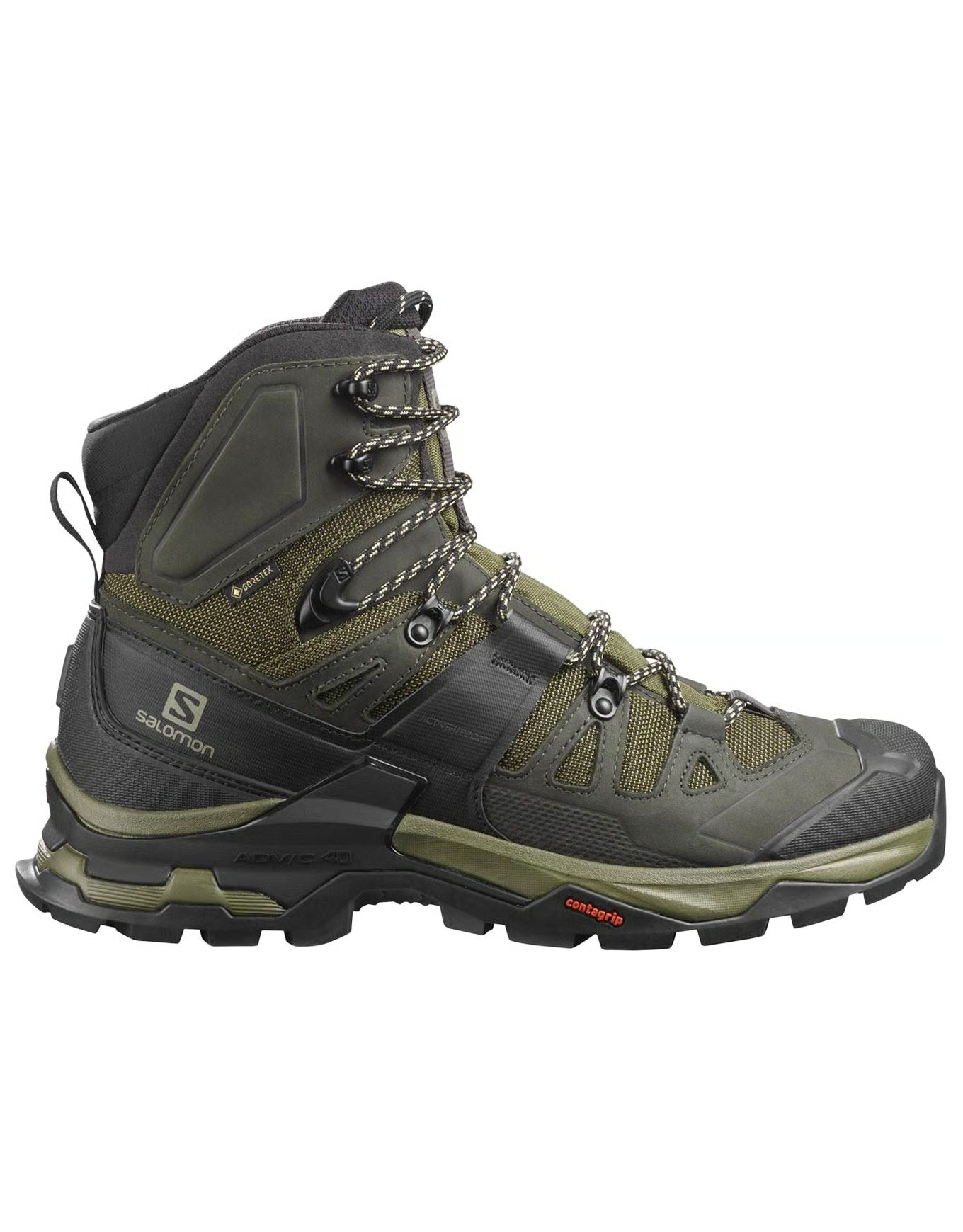
The Salomon Quest 4 GTX has emerged as a top choice among serious trekkers tackling Nepal’s challenging trails. We’ve noticed these boots becoming increasingly common on trail, where their robust build and reliability shine in demanding conditions.
Salomon Quest 4 GTX key features
The Quest 4 GTX stands out with its advanced chassis and innovative lug design that deliver outstanding support and grip across varied terrain. The 4D Advanced Chassis provides exceptional stability while maintaining enough flexibility for natural movement during long treks.
This model features a Gore-Tex membrane that ensures waterproof protection throughout your journey—a crucial feature when encountering unexpected weather changes or water crossings in the Himalayas. The nubuck leather upper combined with textile elements creates a durable exterior that resists abrasion from rocky trails.
Stability comes from the boot’s carefully engineered structure, with a midsole heel height of 22mm and toe height of 10mm, creating a 12mm drop that balances comfort with performance. The Contagrip MA outsole provides excellent traction on both wet and dry surfaces, making these boots versatile across Nepal’s diverse terrain.
Weight consideration remains important for multi-day treks, with each pair weighing approximately 1280g. The high-shaft design extends above the ankle, offering superior protection and support when navigating uneven ground. Additionally, the protective toe cap guards against trail hazards—a feature We’ve personally appreciated when encountering unexpected rocks on narrow paths.
Salomon Quest 4 GTX pros and cons
Pros:
- Exceptional ankle support with padded cuff extending above the ankle
- Outstanding stability through the SensiFit technology and 4D chassis
- Excellent waterproofing performance in river crossings and monsoon conditions
- Protective toe cap for added durability and foot protection
- Impressive traction on varied terrain including mud and rocky paths
- Minimal break-in period compared to traditional leather boots
- Secure lacing system that locks the heel firmly in place
Cons:
- Heavier than many alternatives at nearly 3 pounds per pair
- Top lace eyelets can sometimes dig into the foot when tightly cinched
- Lacing system, while secure, can be somewhat tedious to adjust
- Runs warm in temperatures above 70°F, making them less ideal for summer use
- Lugs may wear down faster than expected, showing noticeable wear around 200 miles
Salomon Quest 4 GTX best for
In our experience testing these boots on Nepal’s trails, the Quest 4 GTX performs exceptionally well for specific trekking scenarios. They excel on multi-day expeditions where their stability and protection prove invaluable.
These boots are ideal for:
- Backpackers carrying heavier loads on challenging terrain
- Trekkers facing mixed weather conditions throughout their journey
- Those prioritizing ankle support and protection over minimal weight
- Hikers tackling technical sections requiring confident footing
- Trekkers on popular routes like Annapurna Circuit and Manaslu Circuit
We’ve observed that these boots perform best in cooler temperatures and shoulder seasons. Their waterproofing and stability make them perfect for Nepal’s pre-monsoon (March-May) and post-monsoon (September-November) trekking seasons, when trails can feature everything from dust to mud to light snow.
Overall, the Salomon Quest 4 GTX offers remarkable performance for serious trekkers willing to accept slightly higher weight in exchange for superior protection, stability, and durability on Nepal’s most demanding trails.
4. Scarpa Zodiac Plus GTX
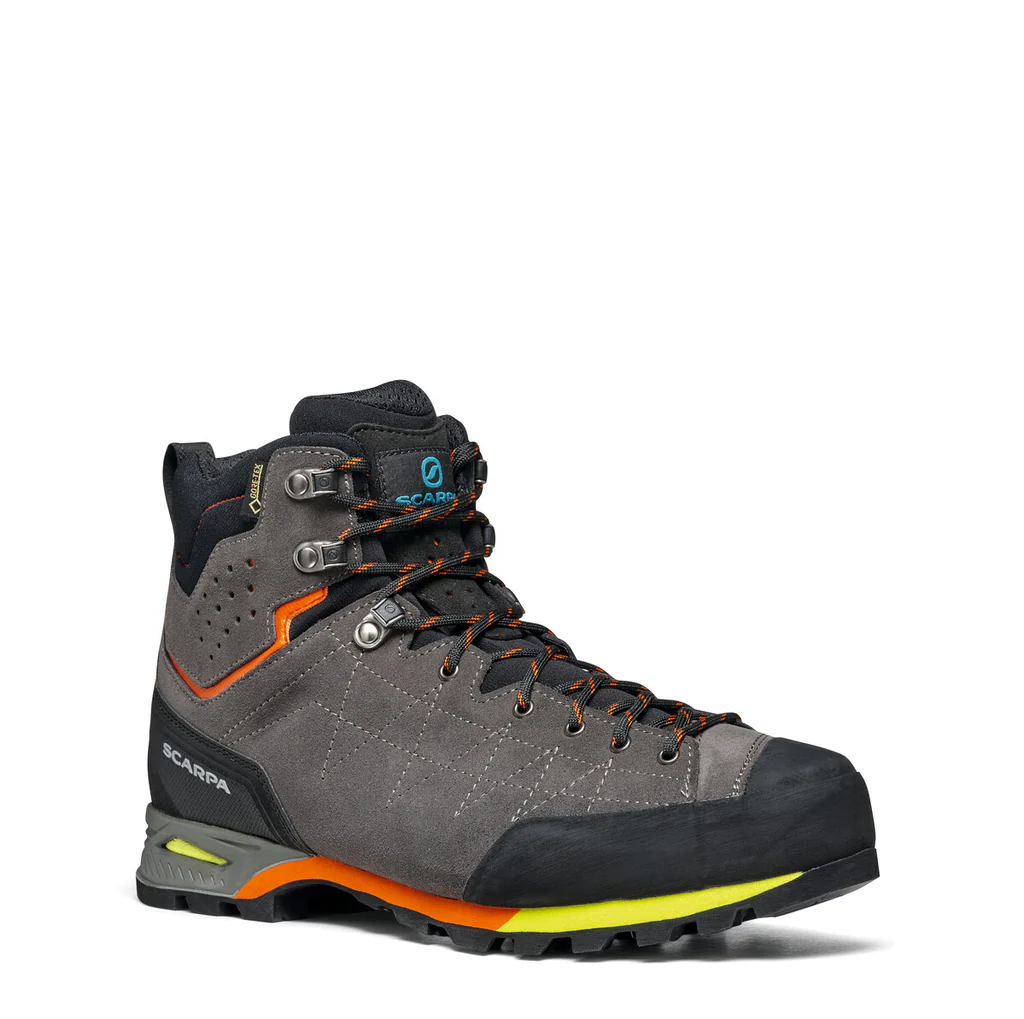
The Italian-crafted Scarpa Zodiac Plus GTX bridges the gap between traditional hiking boots and technical mountaineering footwear. Throughout our testing on Nepal’s varied terrain, these boots demonstrated exceptional versatility across challenging conditions, providing stability without the bulk of heavier alternatives.
Scarpa Zodiac Plus GTX key features
Beyond their sleek appearance, the Zodiac Plus GTX delivers technical performance through thoughtfully engineered components. The medium-volume fit secures your heel and midfoot firmly while allowing toe wiggle room, preventing blisters on long descents. This precise fit comes from Scarpa’s innovative Sock-Fit construction, featuring a stretchy fabric tongue sewn into the uppers that creates a wrap-like feel.
The midsole combines triple-density EVA with polyurethane in the heel, striking an optimal balance between comfort and support for heavy packs. Consequently, the boots maintain substantial support while keeping weight under two-and-a-half pounds per pair. The asymmetric lacing system extends to the toe box with three pairs of hooks at the top, allowing micro-adjustments for different terrain types.
For protection against Nepal’s unpredictable elements, these boots feature water-resistant Perwanger suede uppers with a Gore-Tex membrane. Moreover, the rubber toe rand wraps around to the midfoot, defending high-wear areas from abrasion on rocky trails. The Vibram Drumlin outsole provides reliable traction with deep, widely spaced lugs and a pronounced heel for downhill braking.
Scarpa Zodiac Plus GTX pros and cons
Pros:
- Exceptional ankle support from nicely padded, flexible collar
- Impressive waterproofing performance in streams and wet conditions
- Moderate forefoot flex for comfort on long treks
- Abundant torsional rigidity for stability on uneven terrain
- Superior grip on varied surfaces including snow, mud, and rock
- Relatively lightweight considering protection level
- Short break-in period compared to traditional leather boots
Cons:
- Stiff sole can be uncomfortable on flat terrain
- More expensive than entry-level options
- Too rigid for some hikers’ preferences
- Overkill for lightweight backpacking in warm, dry conditions
- Runs small – sizing up recommended
Scarpa Zodiac Plus GTX best for
In our assessment, the Zodiac Plus GTX excels in specific trekking scenarios. They’re particularly suitable for technical mountain terrain where excellent traction and stability are essential. Their versatility makes them ideal for iconic routes involving boulder hopping, scree slogging, and rock scrambling.
These boots perform admirably for:
- Hikers tackling mixed terrain with both on and off-trail sections
- Trekkers requiring extra stability without full mountaineering boot weight
- Nepal’s high-altitude trails with rocky, uneven surfaces
- Cold or rough conditions where protection is paramount
- Those seeking a boot that can occasionally accommodate universal crampons
Accordingly, if you’re planning routes with its varied terrain challenges, the Scarpa Zodiac Plus GTX delivers exceptional performance that justifies its price. The combination of Italian craftsmanship, technical features, and durability makes these boots a reliable companion for serious Himalayan adventures.
5. Merrell Moab 2 Mid Waterproof

Widely regarded as the “Mother Of All Boots,” the Merrell Moab 2 Mid Waterproof has earned its reputation through exceptional comfort and reliability on Nepal’s diverse trekking routes. These boots have become a staple among trekkers seeking a balance between performance and affordability.
Merrell Moab 2 Mid Waterproof key features
The standout quality of the Moab 2 Mid is its immediate comfort—these boots require virtually no break-in period. Constructed with pig suede leather and mesh uppers, they deliver a true-to-size fit that works especially well for those with slightly wider feet.
Their waterproof design incorporates a protective membrane that keeps moisture out while allowing breathability through strategically placed mesh panels. The Vibram TC5+ outsole features 5mm lugs that provide reliable traction on moderate terrain, though they perform better on damp surfaces than dry rock.
Support comes from the contoured footbed with Merrell’s M Select Fit.Eco+ blended-EVA technology, which cushions the heel and arch. The boots include an abrasion-resistant toe cap for added protection and a padded ankle collar that offers adequate support without restricting movement.
One notable feature is the Kinetic Fit ADVANCED removable contoured insole that can be replaced with custom orthotics if needed. Since the boots are mid-height, they strike a balance between ankle protection and flexibility that many trekkers find ideal for Nepal’s varied terrain.
Merrell Moab 2 Mid Waterproof pros and cons
Pros:
- Exceptional out-of-box comfort with minimal break-in required
- Accommodates wider feet with generous toe box
- Effective waterproofing for stream crossings and wet conditions
- Good breathability through mesh panels
- Strong grip on damp and moderately challenging terrain
- Relatively affordable compared to other high-performance options
- Durable construction that holds up well on established trails
Cons:
- Less traction on rough, technical terrain
- Waterproofing effectiveness diminishes after extended use
- Heavier than some competitors at approximately 2 pounds 4 ounces per pair
- Not ideal for carrying heavy backpacks on challenging routes
- Wider ankle opening can allow debris to enter
Merrell Moab 2 Mid Waterproof best for
Based on our testing, these boots excel in specific trekking scenarios. They’re ideal for:
- Moderate trails with well-established paths
- Trekkers with wider feet seeking additional toe box room
- Budget-conscious hikers who still want reliable performance
- Day hikes and shorter multi-day treks with lighter packs
- Popular routes like Everest Base Camp where extreme technical sections are limited
Beyond Nepal, these versatile boots perform well on classic routes like Kilimanjaro, the Inca Trail, and Annapurna Base Camp. Their comfort-oriented design makes them perfect for trekkers who prioritize immediate fit over specialized technical features, yet still need reliable waterproofing and adequate support for mountain adventures.
6. La Sportiva Nucleo High II GTX

Award-winning breathability meets rugged durability in the La Sportiva Nucleo High II GTX, a standout performer on Nepal’s challenging trails. Unlike many competitors, these boots excel in both wet conditions and high-altitude environments where ventilation becomes crucial.
La Sportiva Nucleo High II GTX key features
The Nucleo High II GTX delivers exceptional breathability through its innovative Nano-Cell technology working alongside the Gore-Tex Surround waterproof membrane. This combination allows moisture to escape from all directions—including underfoot—creating unprecedented ventilation.
The upper construction features durable Nubuck leather with integrated Nano-Cell inserts, providing protection without sacrificing airflow. A distinctive feature is the 3D Flex ankle hinge that enables natural movement while maintaining stability—perfect for navigating uneven Himalayan terrain.
Underfoot, the compression-molded EVA midsole adds noticeable bounce with each step, reducing fatigue on long treks. The Vibram Nano outsoles incorporate La Sportiva’s Impact Brake System, featuring lugs with slanted angles that reduce impact forces and increase traction on varied surfaces.
Each boot weighs approximately 476g (16.8 oz), placing them in the mid-weight category among serious trekking boots. The boots are constructed without intentionally added PFAS, addressing environmental concerns.
La Sportiva Nucleo High II GTX pros and cons
Pros:
- Superior breathability in a waterproof design
- Excellent traction on diverse terrain
- Enhanced ankle mobility with 3D Flex technology
- Available in wide sizes
- Durable construction with protective toe cap
- REI Co-op Editors’ Choice Award winner
Cons:
- Higher price point compared to entry-level options
- Slightly heavier than ultralight alternatives
- Primarily designed for mid-duty use, not extreme expeditions
- Breaking-in period required for optimal performance
La Sportiva Nucleo High II GTX best for
In our experience, these boots excel in specific trekking scenarios. They’re ideal for multi-day treks where varying conditions demand both waterproofing and breathability. Hence, they perform remarkably well during spring and autumn seasons.
They’re particularly suited for hikers who prioritize ankle protection without sacrificing natural movement. Similarly, trekkers with wider feet will appreciate the available wide sizing options.
Rather than serving as specialized extreme mountaineering boots, the Nucleo High II GTX functions best as a versatile all-around performer for moderate to challenging trails throughout Nepal’s trekking regions.
7. Salewa Mountain Trainer 2 Mid
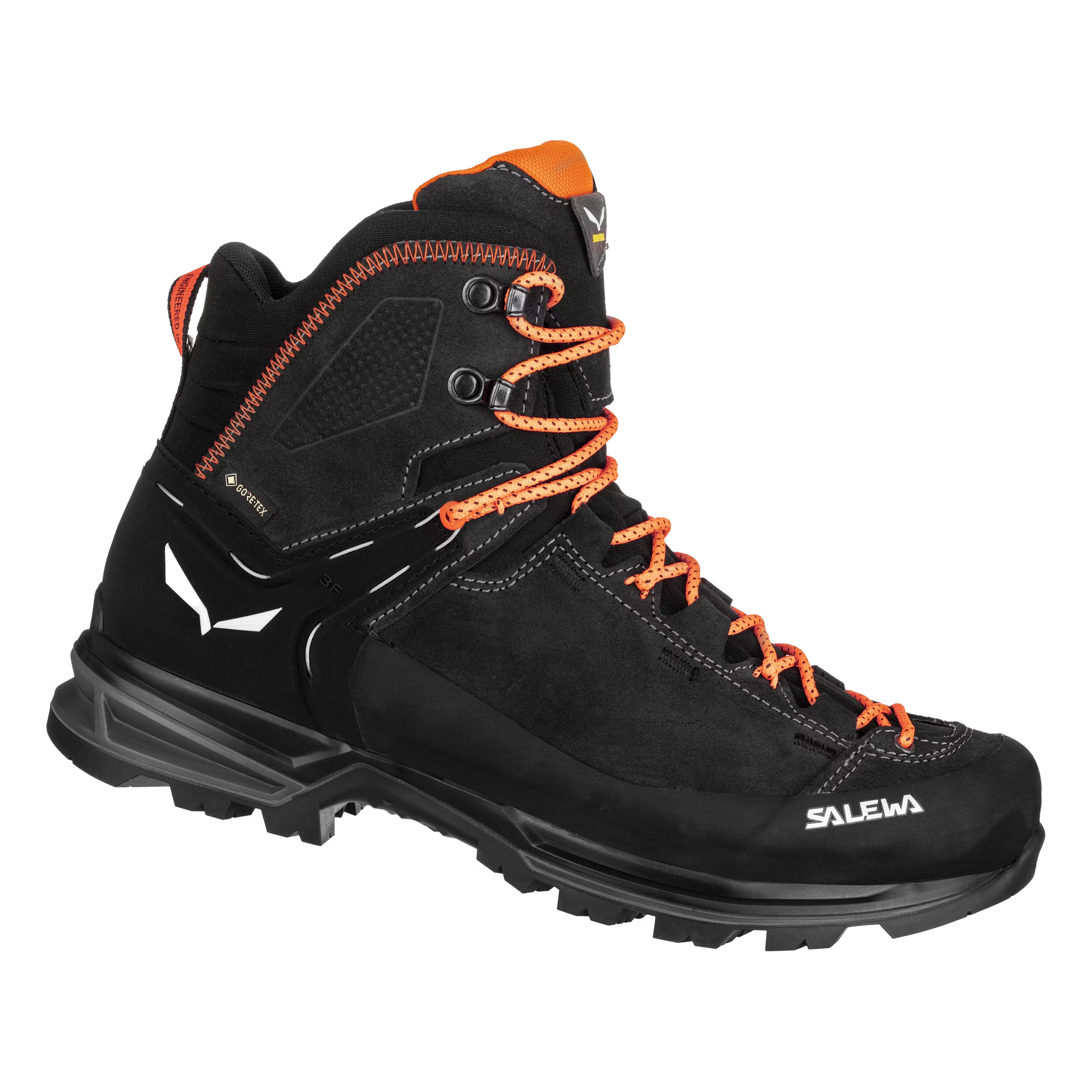
Engineered in the Dolomites, the Salewa Mountain Trainer 2 Mid showcases Alpine design excellence for Nepal’s most demanding trails. After testing these boots extensively on different route, We found their technical performance exceeded expectations in challenging conditions.
Salewa Mountain Trainer 2 Mid key features
At the core of these boots lies the innovative 3F System with steel cables that connects the instep area with the sole and heel, delivering exceptional stability without sacrificing flexibility. The 1.6mm suede leather upper provides durability while a 360° full rubber rand offers complete protection against abrasion from rocks and scree.
The GORE-TEX Performance Comfort membrane ensures waterproof protection even during stream crossings and unexpected weather changes. Meanwhile, the Vibram WTC 2 outsole features aggressive lugs with six boomerang-shaped patterns at the front and two at the back, maximizing traction on varied terrain.
Each boot weighs approximately 600g, striking a balance between robust protection and manageable weight for long-distance trekking.
Salewa Mountain Trainer 2 Mid pros and cons
Pros:
- Exceptional stability on technical terrain
- Superior ankle support with flexible collar
- Excellent traction on various surfaces including wet rock
- Minimal break-in period required
- Reliable waterproofing in challenging conditions
- Climbing-focused lacing system for precise fit adjustments
Cons:
- Heavier than ultralight alternatives
- Higher price point than entry-level options
- Stiffer midsole can feel unforgiving on flat terrain
- Primarily designed for technical routes rather than casual hiking
Salewa Mountain Trainer 2 Mid best for
In practice, these boots excel on Nepal’s most technical routes. The combination of strong support and comfortable flexibility makes them ideal for the Everest, Annapurna, Manaslu, and Langtang regions. Their design provides better traction and grip in diverse conditions, from rocky paths to muddy sections.
Above all, they’re perfectly suited for trekkers who prioritize stability and protection without wanting the full weight of mountaineering boots. The bilight dual density TPU-based midsole delivers ergonomic support that “cradles” the foot, providing all-day comfort even with a heavy backpack.
Choosing the right pair of trekking boots for Nepal requires careful consideration of numerous factors beyond brand reputation. After countless miles on Himalayan trails, We’ve discovered that matching your footwear to specific trek requirements can dramatically enhance your experience.
When selecting trekking shoes for your Nepalese adventure, first consider the season of your journey. Trekking during monsoon months (June-August) demands superior waterproofing, whereas pre-monsoon (March-May) or post-monsoon (September-November) periods might prioritize breathability as temperatures vary significantly throughout the day.
Equally important is your trek’s difficulty level. The popular Everest Base Camp trail features relatively well-maintained paths yet includes challenging sections with significant elevation changes. In contrast, remote treks like Upper Dolpo or Kanchenjunga require boots with superior durability and technical performance on rough terrain.
Weight distribution represents another crucial factor. Carrying heavier backpacks (>12kg) necessitates boots with substantial ankle support and reinforced midsoles. For lodge-to-lodge trekking with lighter daypacks, mid-weight options often provide sufficient support without unnecessary bulk.
Proper fit remains perhaps the most critical consideration. Always try boots with the socks you’ll wear on your trek, preferably in the afternoon when feet naturally swell. Your toes should have approximately one thumb’s width from the front, yet your heel must remain securely locked in place.
Remember that even premium trekking boots require proper break-in time – typically 2-3 weeks of regular wear before your expedition. This prevents painful blisters that could derail your adventure.
Consider investing in quality merino wool socks that wick moisture effectively. Likewise, gaiters provide valuable protection from debris on dusty trails and added warmth in snow conditions at higher elevations.
Ultimately, the perfect trekking boots for Nepal balance protection, comfort, and durability. Your specific needs depend on trek duration, terrain difficulty, pack weight, and personal preferences – factors worth careful consideration before making this essential investment.
7 Best Trekking Boots in Nepal Comparison Table
| Boot Model | Weight | Key Features | Best Use Cases | Main Pros | Main Cons |
| La Sportiva Trango TRK GTX | 1,440g | – 3D Flex System ankle hinge – GORE-TEX waterproofing – Vibram Mulaz outsole | – Multi-day treks with heavy packs – Technical terrain – Varied conditions | – Exceptional ankle support – Superior waterproofing – Excellent breathability | – Narrow fit – High price – Runs half-size small |
| Meindl Vakuum | 600-620g (UK 8) | – Memory Foam System – Nubuck leather construction – GORE-TEX membrane | – Multi-day expeditions – Mixed rocky terrain – Heavy pack carrying | – Exceptional comfort – Superior customized fit – Excellent ankle support | – Heavier design – High price point – Limited breathability |
| Salomon Quest 4 GTX | 1,280g | – 4D Advanced Chassis – Gore-Tex membrane – Contagrip MA outsole | – Heavy load backpacking – Mixed weather conditions – Technical sections | – Exceptional ankle support – Outstanding stability – Excellent waterproofing | – Heavy weight – Warm in high temps – Complex lacing |
| Scarpa Zodiac Plus GTX | Under 1,134g | – Sock-Fit construction – Gore-Tex membrane – Vibram Drumlin outsole | – Technical mountain terrain – Mixed on/off-trail sections – High-altitude trails | – Strong ankle support – Good waterproofing – Moderate flex | – Stiff sole – Expensive – Runs small |
| Merrell Moab 2 Mid WP | 1,020g | – Pig suede/mesh upper – Vibram TC5+ outsole – M Select Fit.Eco+ footbed | – Moderate trails – Day hikes – Lighter pack loads | – Immediate comfort – Wide toe box – Affordable | – Limited technical capability – Diminishing waterproofing – Heavy for category |
| La Sportiva Nucleo High II GTX | 476g | – Nano-Cell technology – Gore-Tex Surround – 3D Flex ankle | – Multi-day treks – Varied conditions – Moderate to challenging trails | – Superior breathability – Excellent traction – Enhanced ankle mobility | – High price – Requires break-in – Not for extreme expeditions |
| Salewa Mountain Trainer 2 Mid | 600g | – 3F System – GORE-TEX membrane – Vibram WTC 2 outsole | – Technical routes – Rocky paths – Heavy pack carrying | – Exceptional stability – Superior ankle support – Excellent traction | – Heavy weight – High price – Stiff midsole |
FAQs
Q1. What are the most important features to look for in trekking boots for Nepal?
The key features to prioritize are waterproofing, ankle support, durable construction, and good traction. Look for boots with Gore-Tex membranes, sturdy midsoles, protective toe caps, and Vibram outsoles for optimal performance on Nepal’s varied terrain.
Q2. How much should I expect to spend on quality trekking boots for Nepal?
Quality trekking boots for Nepal typically range from NPR 15,000 to NPR 50,000. While budget options exist, investing in a higher-end pair around NPR 30,000-40,000 often provides better durability, comfort, and performance for challenging Himalayan treks.
Q3. Are lightweight or heavy-duty boots better for trekking in Nepal?
The choice depends on your specific trek and preferences. Lightweight boots (400-600g) offer more flexibility and comfort on moderate trails, while heavier boots (600g+) provide better support and protection for technical terrain and heavy pack loads. Consider your trek difficulty and pack weight when deciding.
Q4. How long before our trek should I break in new hiking boots?
Ideally, start breaking in new hiking boots at least 2-3 weeks before your trek. Wear them regularly for short walks, gradually increasing distance and varied terrain. This helps mold the boots to your feet, preventing blisters and discomfort during your actual trek.
Q5. Can I use the same boots for both summer and winter treks in Nepal?
While some versatile boots can handle both seasons, it’s often better to have season-specific footwear. Summer treks benefit from breathable, lighter boots, while winter treks require insulated, waterproof boots with better traction for snow and ice. Consider the specific conditions of your planned trek when choosing.